
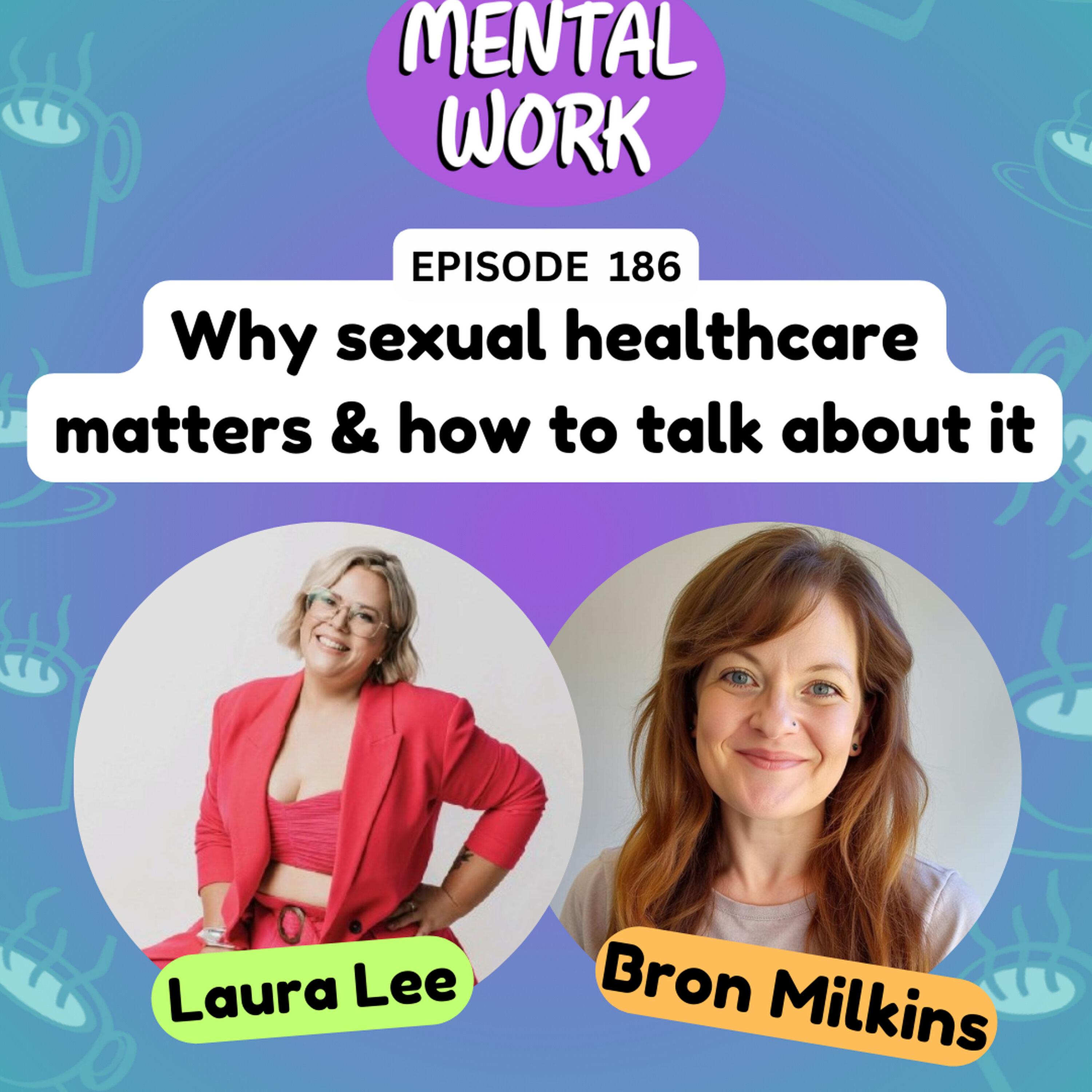
Bron is joined by Laura Lee (psychologist & sexologist) to talk about why sexual healthcare matters in therapy and how to talk about sex with clients without fear, awkwardness, or shame.
They chat about:
👉 Laura's journey into sexology, beginning with noticing gaps in her own psychology training
👉🏿 Why avoiding conversations about sex can unintentionally reinforce stigma
👉🏾 Common barriers clinicians face to talking about sexual health with clients
👉🏼 The EX-PLISSIT model as a practical, containing framework for opening up conversations about sex, which psychologists can use in everyday practice
Thank you Laura for this incredible conversation! 🥰
Guest: Laura Lee, Psychologist and Sexologist, Board-Approved Supervisor
LINKS
- Laura's LinkedIn
- Laura's Instagram @lauraleesexology
- Laura's private psychology practice
- Research paper published by Laura: "The impact of communication on sexual response: A summary of findings"
- Research paper: The Extended PLISSIT Model for Addressing the Sexual Wellbeing of Individuals with an Acquired Disability or Chronic Illness
THE END BITS
Mental Work is the podcast for psychologists about the realities of working in mental health, with an early-career focus. Hosted by psychologist/researcher Dr Bronwyn Milkins.
Support the show by buying me a virtual coffee ☕🍵
Have a question, episode idea or just want to say hi? DM Bron on Instagram, leave a comment on the Spotify episode, or email mentalworkpodcast@gmail.com
Apply to be a guest / YouTube (with captions & transcript) / Website
CREDITS
Producer: Michael English
Music: Home
Commitment: Mental Work believes in an inclusive and diverse mental health workforce. We honour the strength, resilience, and invaluable contributions of mental health workers with lived experiences of mental illness, disability, neurodivergence, LGBTIQA+ identities, and diverse culture and language. We recognise our First Nations colleagues as Traditional Custodians of the land and pay respect to Elders past, present, and emerging. Mental Work is recorded on unceded Whadjuk Noongar boodja.
Disclaimer: Mental Work provides informational content. Mental Work is not a psychological service and being a listener or guest does not establish a therapeutic relationship. Content should not be considered a replacement for professional consultation or therapy. All views expressed are personal, subject to change, and do not represent those of any affiliated employer, service, or organisation past or present. Efforts are made to ensure accuracy, but opinions may not always align with fact. Listeners are encouraged to thoughtfully assess the information presented and report any inaccuracies or concerns via email. Further information can be found here.
See omnystudio.com/listener for privacy information.
[00:00:05] Bronwyn: Hey, mental workers. You're listening to the Mental Work podcast, the podcast about working in mental health for early career mental health workers. As always, I'm your host, Bronwyn Milkins, and today we are talking about why sexual healthcare matters and how to approach it with clients. Sex is part of life for many people, yet many mental health workers feel uncertain or plain awkward raising it in their session.
In this episode, we're unpacking why sexual healthcare is a critical component of holistic mental health care, how to talk about it ethically and confidently with clients, and how to reflect on your own values to better support the people you work with. Our guest today is Laura Lee. Hi, Laura.
[00:00:40] Laura: Hello. It is so nice to be here.
[00:00:42] Bronwyn: It's a pleasure to have you on. Could you please tell listeners who you are?
[00:00:46] Laura: My name is Laura. I am a psychologist and a sexologist I've been a psychologist for, um, I think it's like 17 years or something frightening like that. Um, and I run my own practice, uh, on beautiful Wadawurrung country, which is on the south coast of Victoria in Geelong. Uh, so I run my own practice there seeing clients, I see individuals as well as people in relationships and offer relationship therapy. I also am a Board approved supervisor and offer supervision particularly for healthcare providers, uh, who want to feel more confident and more competent to talk about sex with their clients and support their clients' sex related or sexuality related concerns.
And I do a bunch of other stuff. I do coaching and training and education and workshops and speaking, and all sorts of other bits and pieces too. But I work at this beautiful intersection of like sex, relationships, and mental health, and I love that.
[00:01:50] Bronwyn: How did you come to be interested in sexual healthcare?
[00:01:53] Laura: I noticed a lot of my clients that I was seeing in my practice as a psychologist were talking to me about sex and relationships. And a lot of my clients have typically been much younger than me, so I often work with, with sort of adolescents or people in their twenties, and I was under the assumption that sexual health literacy and ideas around sex and gender roles had come a long way from when I was that age. So I'm in my forties and, uh, things that I was saying to my friends or hearing about when I started out having sex 20, 25 years ago... I thought we'd come a long way since then and I thought things had changed and I found out from my clients, from my younger clients that I was wrong. And what I was hearing from my clients was the same stuff I was hearing growing up. You know, really, um, just a real misunderstanding around sexuality, sexual health, um, the role of sex in relationships, um, even just a basic understanding of anatomy of pleasure... I was, I was really surprised, uh, and really shocked that sexual health literacy had not moved with the pace that I thought it had.
And what happened for me was I really wanted to help my clients, but I felt really ill-equipped to do so because sex really was not covered at all in my psych training. I, I hardly remember it being mentioned. And as I started to talk to other healthcare providers, I kept hearing the same thing over and over at healthcare providers feeling really like ill-equipped to support their clients in this space. And that was what prompted me to go back and do a Master's. I did a Master's of sexual and reproductive health and psychosexual therapy, and that changed everything for me, for my career, for my life. It changed everything.
[00:03:46] Bronwyn: So you noticed this gap and you were really motivated to help, and you noticed in your own training that you hadn't received much or any information on sexual health.
[00:03:55] Laura: Mm-hmm. Yes, I really did. I, I'm still struggling as I think back to all my psych training. To think about any time that sex was really mentioned. And as I said, as I talked to more of my colleagues, I heard more of the same. In fact, I have a friend who's a GP who told me that sex was covered in one like two hour lecture in her medical, in entire medical training. And it just blew my mind... that frightened me when I think of all the times I've gone to a GP for se, for a sexual health concern, um, or suggested others do the same and realize that actually a lot of them are feeling just as unsure about how to navigate sexual healthcare.
And uh, I just felt really, I felt really sad. I felt kind of angry and I felt like I wanted to make a difference. Because I had been fortunate enough to have some really wonderful healthcare experiences when I'd experienced my own difficulties with things like endometriosis and vaginismus, and had suffered years of painful periods and painful sex. And I'd been really fortunate to have some healthcare providers who were competent in the space and were able to support me, and that made me really hungry to want to be able to provide the same kind of quality sexual healthcare and to help other healthcare providers feel like they could do the same.
[00:05:11] Bronwyn: It really sounds like you're passionate about quality education and care around sexual. Health, could you just tell listeners why you think it's really important and why you think it matters to mental health care as well?
[00:05:21] Laura: I think for a couple of different reasons that come to mind. I think that sexual healthcare is of course, a fundamental part of healthcare. Sexuality is a part of health and wellbeing. Um, it's a part of being human. I do think not addressing it and not raising the topic of sex can send some messages to clients that we don't want to be sending, right?
If I don't bring it up and if it appears to the client that I am skirting around the topic or actively avoiding the topic, that's gonna reinforce some really stigmatizing messages to people about sex being not a welcome topic here or being a taboo topic to talk about, which of course, it's not. So sexual healthcare really involves healthcare providers first and foremost, being proactive about inviting their clients to talk about their sexual health concerns with them right from the outset, just as they would any other topic?
[00:06:19] Bronwyn: Absolutely, and maybe I can bust a myth early on, but do you need to be a sexologist like yourself or a sexual health expert to be able to have conversations with clients about sexual health?
[00:06:29] Laura: Oh, absolutely not. I mean, this, this topic of sex is no different to any other topic we talk about with our clients, which is that we do not have to be the subject matter experts on all the topics we cover with our clients. What is most important is, of course, all the stuff that goes into that therapeutic alliance, that interaction in the room, you know, meeting our clients with warmth, with empathy, non-judgment, compassion, uh, being validating, being reassuring, like that doesn't change no matter what the topic is. And as someone who's been a psychologist as long as I have, there are of course topics all the time that come up in my practice that I have very little experience with and very little understanding of.
So I know from that experience that that is what matters to the client and to the client experience. Like we can manage the, the logistics of treatment along, which might include referrals along the way, but what matters in that moment in the space is how you hold that, you know, how you hold that therapeutic alliance and how you meet that client where they're at, and that's gonna matter no matter what the topic.
[00:07:39] Bronwyn: Totally, and I think that was really beautifully put, and it really sounds like you were already creating a space of safety for your clients, given that they were already talking to you about sex before you did your training. And so those are the foundational skills that psychologists can draw on.
[00:07:53] Laura: I think so, you know, something I say to all my new, all my new clients, and I always have, and I still do to this day, I outline to all my clients in my very first session with them that the research tells us that one of the biggest predictors of, of therapeutic success really is the nature of that therapeutic relationship. It's a far bigger predictor than what kind of therapy I administer, or how long I've been a therapist for or anything like that. So I'm really upfront with my clients that this therapeutic relationship is going to be the biggest predictor of whether they get to achieve their therapeutic goals, and that I want us to co-create that together and for us to have an open and honest conversation if we feel like we can't. You know, I'm very upfront with new clients if I feel like there's someone better placed to help them. That I'll help them find that person. And likewise, I invite them to let me know if it's not feeling quite how they want it to feel. I'll help them find someone more suitable.
So I've known for a really long time that that's what makes for a really wonderful, not just therapist experience, but really like healthcare experience. And I can think of that in my own healthcare interactions. And I've had my own experiences of psychologists, uh, some better than others, of course, in terms of fit for me, and how, how fantastic it feels when you find someone that is the right fit, what that means as a client.
[00:09:13] Bronwyn: So you've, you've done a lot of training, you do a lot of speaking about sexual health, sexuality, what are some common barriers that professionals face when it comes to talking about sex and sexuality? So they recognize it's important, but maybe what are some things that might get in the way?
[00:09:27] Laura: Mm-hmm. Uh, I think, definitely therapists, clinicians, own worries, fears, anxieties about what's going to happen if they bring it up, so that is things like fear of saying the wrong thing. Definitely a fear of intruding, like crossing a boundary, uh, offending the client or the client feeling uncomfortable about the topic being raised. I think sometimes there is too, you know, I appreciate you doing that mythbusting you did a moment ago 'cause I think sometimes there is this perception that sex sits over here and eats separately to everything else. And even now I get, um, I get referrals, uh, that where clients come to me and say that they've engaged with a previous healthcare provider who has said they would be better off seeing me because they don't deal with sex, you know, they don't work with sex. So it's like treated as this thing that stands alone, separate to the rest of the mental health experience or human experience.
Um, I do think a couple of other barriers that show up... one is around a real lack of cultural competence and cultural competencies, really important to all of our practice, and that is no different to the topic of, of the topic of sex. So there is uncertainty around cultural suitability. Uh, and then finally, uh, you know, the other big barrier that I see is, uh, someone's own stuff showing up. Like we are all human too, so our own discomfort with the topic, uh, and our own uncertainty and trepidation and awkwardness coming up into the room.
And I, uh, this is an area I really love to support healthcare providers in because I am really confident talking about sex now. I do it every single day at work, but also personally, as you can imagine, you can imagine what I'm like to live with, like, this is a huge topic for us in my life, but that was not the case for me for most of my life. So my confidence and comfort talking about sex is actually relatively new for me too. So I really remember my own discomfort, anxiety, uncertainty, even shame around this topic not that long ago. So I really love to help healthcare providers become aware of the fact that that might be in the room too, and give them strategies to navigate that as well.
[00:11:45] Bronwyn: With this relatively new confidence that you have around sex, I'm just curious about the process for you. Was that a, a self-reflective process or was that through your training that you gained this confidence?
[00:11:58] Laura: Yeah, I think... so I think a couple of things kind of happened at the same time when I did my, uh, master's a few years back now, my master's in sexual health, sexual and reproductive health, uh, I think going through that course with my peers, um, so openly talking about sex, our own sex, our own relationships as part of our training... really opened my eyes to how much discomfort and shame that I had been carrying around the topic, and I was able to really trace that back to some early experiences growing up. I was not encouraged to talk about sex. I have some very vivid to this day, memories of being actively discouraged by my parents from talking about sex, even as a young adult. So I had a lot of messaging that sex was definitely something that was not okay to be talked about, and I wasn't even sure if it was okay to be doing.
So fast forward to me, you know, only sort of what, four years ago now doing my masters and really kind of having that reckoning of like, oh my gosh, I have spent all of these years, decades really, in such a state of, of shame and awkwardness around this topic that actually number one is so human, but actually two turns out to kind of be my... turns out's kinda be my calling professionally. Uh, and so freeing myself from that was a work that I did, I think through the masters.
And then putting myself out there talking about the topic and sharing my own stories so publicly the way that I do now. And it's, it's not a finished journey by any stretch of the imagination, but it has been incredibly liberating to be able to sit with any audience, whether that is my clients, my partner, my family, a podcast audience. And be able to talk about this topic with such kind of comfort and enjoyment is, is, uh, it's been life changing.
[00:14:12] Bronwyn: I'm really glad for you. I'm pleased that that's been such a positive journey for you.
[00:14:16] Laura: Mm-hmm. Thank you. I really appreciate that. Thank you, Bronwyn.
[00:14:19] Bronwyn: So I've studied the graduate certificate in sexology, um, and the reflective space I think echoes what you are saying as well. I found it a deeply supportive and safe space to explore my own patterns and histories with sex, sexual health, sexuality... um, and it was so amazing to hear everybody else's, or my peers perspective as well. There was a central focus, for example, on pleasure in, um, sex, which is something that having read, I guess medical texts or psychological texts had just been so absent. And being exposed to new materials around pleasure and rights to pleasure, it was really transformative, to be honest.
[00:14:58] Laura: Yes, likewise. I think that's the other part of kind of what shocked me when I was talking earlier about what I heard from my younger clients. Was that sex education was still this real risk mitigation model rather than a pleasure centered model. So, uh, the main messaging that people, young people are still getting about sex is that it is really, really risky. You are at risk of an STI, contracting or giving someone an STI. You are at risk of getting pregnant or getting someone pregnant, or you are at risk of assault. That is essentially the messaging around sex, that it is a really risky activity and you better just be real, real careful if you're gonna take that risk. And there's no messaging about the fact that it can actually be wonderful and pleasurable and connective and stress relieving and pain relieving and just really bloody fun. So like that is the stuff that is still missing from our sex education model.
[00:15:53] Bronwyn: totally. And that's really disappointing. It's so disappointing to hear that and I'm, I'm sure you feel quite passionate about that as well.
[00:15:59] Laura: I do, and I'm, I'm so fortunate that's a huge part of my work now. Like a lot of my referrals, I work predominantly with women and gender diverse people, and, and overwhelmingly my referrals are about people wanting to access pleasure, whether that is work on issues, issues of desire, explore their kinks, um, explore their relationship structure, connectivity, diversity of, of sexual menu like, that's the work I get to do now and, and it's so fun, so fun.
[00:16:28] Bronwyn: Amazing. One thing that I thought would be helpful for listeners is something that I came across during my studies when doing the grad cert, and that's something called the EXPLISSIT model, and I thought it'd be helpful framing how we can start conversations with clients. Is this something that you could tell us a little bit about?
[00:16:46] Laura: Yeah, absolutely. I'm a huge fan of these kinds of models too, because they're very containing for healthcare providers. So this, uh, EXPLISSIT model, which was originally just the implicit model, but has been the 'EX' represents this extended version of it, is really about focusing on this importance of proactivity from the healthcare provider to clients. So this proactive kind of, uh, information gathering and permission giving. So we are really affirming for our clients the topic of sex is welcomed here. Not, not waiting for the client to bring it up and also not just affirming that it's toler, I can tolerate it. We're actually affirming that this is really welcome. So the permission is very explicit, and I love this idea of explicit permission that is not just like a one-off, oh, you can talk about this if you want, and then we never mention it again. It is woven in as part of our healthcare, as part of our treatment.
So the, the 'PLICIT' part stands for this... P is for Permission. And then it goes into the L and the I, which is this Limited Information. This is about providing really factual information that meets the client where they're at, doesn't overwhelm them. The S's stand for Specific Suggestions. So again, tailoring treatment, but again not about overwhelming the client. And then the I and the T represent this intensive therapy, so like referring on as needed.
The Extended part, the, the X that makes it Explicit is really extended out to include a lot more of kind of, um, well there's an element of like reflective practice, but it also brings in the component of education, which is about providing clients with, um, appropriate, including age appropriate, culturally appropriate, um, gender appropriate resources, and uh, arming this client, arming our clients to continue their own journey of discovery.
Something I really like to support my clients with is creating this more sex positive context for themselves. If I am the first person they've ever really talked to about sex and they've never followed any, you know, sex educators on social media or never listened to a podcast or never read a, a book about the topic or anything, I really like to arm them with resources to start to cultivate an environment where the discussion of sex is normalized. So that's a bit about the model.
[00:19:16] Bronwyn: Yeah, no, thank you for explaining that, that was a great overview, and I've got one of the articles up... there's one from 2006, it's titled 'Implicit to Explicit', and I'll make sure I link to a few of these in the show notes. But for example, with the permission giving, an example they have here is people with cancer often have concerns or questions about how this will affect their sex life, is there anything you'd like to ask me, or how has incontinence affected the way you feel about yourself? So, yeah, these are some like really nice openers about conversations.
[00:19:47] Laura: Yeah, absolutely. A really nice example that I often talk specifically to psychologists about is working with clients who are on antidepressant medication which is almost certainly going to interfere with sexual functioning. And so if you are talking to a client about their medication and their satisfaction with that medication or side effects, it's not about just saying, are you having any side effects? It's about saying commonly or not uncommonly, people who take this medication experience some issues with X, Y, and Z, and that might be sleep and it might be appetite, but it might also be sexual functioning. And you're saying it just like you would say anything else and you're not waiting for the client to bring it up. You're saying, very common for people to take this medication and have difficulty with maintaining an erection or achieving an orgasm or achieving vaginal lubrication. Have you experienced any of those difficulties? That is what we're talking about when we're talking about explicit permission.
[00:20:37] Bronwyn: And I noticed the way that you are phrasing that as well, it's very nonjudgmental and matter of fact, um, is that something that you strive to do?
[00:20:43] Laura: Yeah, well, yes. So yes, there is an element of normalizing it and the matter of factness can be helpful, it can put people at ease. And, I was gonna say, but, but I'm gonna say, and uh, we might sometimes be a little bit awkward and that's okay too. So it's okay to not be able to speak as like, matter-of-factly as you maybe just heard me speak, it's okay to also stumble over something or also make an awkward pun that you both laugh at. Like you're, we are allowed to laugh and have fun in therapy. So I, I just wanna kind of call out that, uh, it doesn't have to be all cold, hard, matter of fact... facts that, uh, we can also bring our humanity into the space and not, and, uh, even notice our own awkwardness or, you know, be saying to the clients, sorry, I'm not sure of the right word for this, or, uh, you know, you mentioned sex is painful in this position. I'm not actually sure what that position is. I'm so sorry, and like have a laugh about like you're, it's okay to do that too. So there's a balance.
[00:21:45] Bronwyn: Just extending on that, I think a follow up conversation, even with clients having opened it initially and asked for permission, might be something around how they refer to their body parts and that could include genitals, and I just wondered whether you could talk to us about how we can get on the same page with how we talk about sex with clients.
[00:22:02] Laura: Yeah, I think that's a really good example, right? Of like, of... yes, exactly the, exactly as I was just saying there... here's the space where someone might be using a more colloquial term or a slang term, and we might be using more clinical language. I do think meeting a client where they're at is important, that doesn't necessarily mean needing to use their language, but it might mean kind of acknowledging that their language is okay to use and makes sense to you. And I learn a lot from my younger clients, so I learn a lot of terms myself, slang terms for things that I, I am not across those slang terms, so, uh, which is fine, it's all part of it. It's all part of the fun.
So I think there is though, in this case, benefit in us modeling the neutrality of something like body parts, right? Because even though the slang term on the surface might not be particularly kind of, might not kind of have any kind of negative connotations, I think so much of the way we've talked about sex, is kind of steeped in some problematic, some problematic history in terms of patriarchy and um, definitely sexism and misogyny. So I think noticing that that might be present too, and modeling appropriate use and neutral terms of language around body parts can be particularly helpful. Even just the very ob- you know, very obviously I'm thinking about the distinction between vulva and vagina, even just, you know, just being like, oh, well actually, I know you said vagina, but actually the vagina refers to this internal structure and the vulva is actually the bits that you can see on the outside, that kind of stuff can be, uh, can be really helpful to just model, this is a neutral body part, this is no different to me than a nose or a foot.
[00:23:50] Bronwyn: One of the things we brought up just before when we were talking about barriers that professionals may face when it comes to talking about sex and sexuality with clients, I think reading between the lines was maybe a perception that this is private and maybe we're being intrusive or kind of going outside of scope. And I wondered if that's linked to our own values and discomforts. And could you please tell us like why it's important that we explore our own stuff when it comes to sex?
[00:24:16] Laura: Yeah, that's actually a big part of our training. Like it's a big part of the masters is our own kind of stuff around sex. So, uh, and for this exact reason, it can be such a barrier, this idea that it is intrusive, like it's too, it's too personal. It's too intrusive... I can't think of any other topic where we would say that in the therapy room, but it is just, it is just treated as this thing that happens in private over there. And a lot of that is based on our own experiences upbringing, as I said, my own upbringing was that this is something that we're not supposed to talk about, but I also overlay the fact that we just live fundamentally in this very sex negative culture. I mean, the way I even have to like spell sex on my Instagram to be able to talk about my work is just sending such a clear message, the fact I have to replace the word with emojis or whatever, sends such a clear message that this is a bit not okay, not okay. It's a bit not okay. It's a bit not allowed to be talking about this. The fact that my account is almost always shadow banned, even though I'm just providing educational content, uh, just speaks volumes and sends messaging to all of us that this is a bit not okay to talk about.
So no wonder I like, I kind of have, I have so much compassion for healthcare providers that are saying like, I don't wanna bring it up because what if the clients, like, gets mad at me or is offended? I totally understand that because we live in this society where it is so unusual to talk about this topic so openly, which is precisely why I spend so much time talking about this topic so openly.
[00:26:00] Bronwyn: Totally. Is there a way that professionals could start having that reflective practice around sex and sexuality in their own discomfort without undertaking, I guess formal university training?
[00:26:13] Laura: Yeah, absolutely. I mean, this is always gonna be really valuable to engage in truly reflective and reflexive practice. You know, really connecting with your peers, with your supervisors around this topic and being really willing to notice what comes up for you in the room and take the time to actually actively reflect on that and not shy away from the fact that there's probably some very personal, some very painful, some very old stuff showing up for you if this is uncomfortable for you.
I mean, in my experience, sex is often touching some really shame filled parts of ourselves. You know, those parts of ourselves that feel fundamentally like I am in some way, not okay as I am. I'm in some way flawed or defective or broken, and I see sex bump up against these parts of ourselves for all of us. So, and clinicians are not immune from that.
So being really willing to reflect on what is coming up for me here and why and where is it coming from, is going to be really a really important part of your practice. If ever you notice a topic, not just sex, but if ever you notice a topic where there is stuff for you coming up, including what might be actually avoidance. Like I even invite people to reflect on how our conversation is feeling, you know, as they're listening to this episode, is it bringing up a sense of like, this isn't for me, I don't ever, I don't need to talk about sex with my clients, like this doesn't apply to me. Is it bringing up some resistance? Is it bringing up discomfort? Like really noticing what is coming up for you, even just as you imagine talking about this with your clients is going to be helpful.
[00:27:54] Bronwyn: That's really helpful. I remember early on in my training, I would bring up things, uh, related to sex with my supervisor, and I remember noticing some discomfort in my supervisor around discussing sex as well, and I never brought it up in supervision again. There was just intense discomfort from them. And so I guess, what I'm trying to say is I think it's important to also be with supervisors who are aware of their discomfort and have that reflexive practice around sex. And if you feel like maybe, uh, your supervisor is not like that, it could be beneficial to find someone else. Thoughts.
[00:28:27] Laura: Yes. I mean, yes, because I can, uh, I don't wanna speak for you, but I can only imagine that re-, as you said, you never brought it up again, so this reinforces like, oh, uh, some part of you goes, ah, we're not supposed to talk about this. Like, it just reinforces this idea of, we are not supposed to talk about this, and I'm, I'm so, I'm just so aware of that everywhere I go and everywhere I do this work.
So yes, getting a supervisor who, who can hold some similar space with you, but I wanna be clear what I mean by that. Like, that doesn't mean the supervisor has to have all of their stuff figured out and have no discomfort either. Just can they put words to their own discomfort too? Can they be willing to notice their own stuff coming up, or their own uncertainty. Like if, if you've got a supervisor who's like, I'm having my own reflection that I haven't really been forthcoming about this topic with my own clients, or I haven't given my clients explicit permission to talk about sex that often, like, that's okay. You can still work with that as long as that supervisor's willing to do that work as well.
[00:29:31] Bronwyn: I completely agree. I would love it if, if supervisors shared those reflections-
[00:29:34] Laura: Hmm. So would I, yes. That's very powerful.
[00:29:39] Bronwyn: Absolutely. So a bit of a different topic and it's one that could be a podcast in itself, but I wanted to ask you about intersectionality and inclusivity. For example, when working with LGBTQIA+ clients or clients from culturally diverse backgrounds, how can I be mindful of intersectionality when talking about sex?
[00:29:57] Laura: Yeah, a couple of things. I think it is really important to avoid, um, some assumptions or bring your own biases into the room. And so when I'm talking about assumptions, uh, I might share an example from my recent research. I had a paper published last year in the Journal of Positive Sexuality, which was all about sexual communication and the impact of it on desire and satisfaction. And one of the findings from that paper was around gender differences and cultural differences for when sexual communication was most valued and most welcome in the relationship.
So it would be easy as someone you know, like myself who works as a sexologist and a psychologist, it would be easy to just form the opinion that the more sexual communication in a relationship the better, and everyone should just be talking about it from the start all the time. But actually, uh, my research found that there were cultural and gender differences for when that sexual communication was actually welcome and valued. And you know, there were some groups in the population for whom sexual communication was important straight away, like first date, and there were other groups in the population for whom sexual communication didn't become important until after the 12 month mark of a relationship.
So this is what I mean when I talk about avoiding assumptions. If you have a client in front of you who's been with their partner for six months, and you launch into the importance of communication, and that's actually not something they want to do, value, is culturally appropriate, you are gonna be totally missing the mark about how to support them.
So avoiding our own assumptions about what we think might be best here is, is really key. And we can do that by really, um, asking some very open, curious questions right from the start. So for example, one of the questions I ask all my clients, if they tell me they have a partner, um, I always ask them if that relationship is monogamous or not, and sometimes they get some strange looks, 'cause probably they haven't been asked that before by a healthcare provider, right? 'cause most people just assume, um, monogamy. But every now and then, I do get someone say, and in fact, more often than not, but that's probably because of the work that I do, I, I'll, I'll get answers. Like, well, no, actually we have this level of openness, or, no, I have another partner or, we swing on the weekend or whatever. And that is a really nice moment in the therapeutic relationship, 'cause you can imagine what it does for that client.
And to come back to your question, when we are thinking about intersectionality and inclusivity, you can imagine what it does for someone when we are not just assuming things like, you know, informed by mono-normativity or heteronormativity about their relationship status, for example. So I think this is a really nice start to being mindful of intersectionality.
Two other things I would mention here. One is about our, our job to educate ourselves. So that balance of like not making assumptions, everyone is different, but also we can educate ourselves. So, you know, if a client gets referred to you and you read in their intake form that they are polyamorous, for example, I don't think it takes much effort to just like Google what that word means if you don't know. Like just do, you don't have to have all the answers. And obviously you wanna hear the client's experience, but have some level of understanding, don't, uh, add to the emotional labor of our clients to teach you.
Um, and secondly, I think be really sensitive to systemic barriers and how that shapes sexual health status and access to sexual healthcare. For example, there are communities within the Australian population who are more likely to come into contact with certain STIs, for example, um, or who live in an area where they have less access to, um, STI screening or menopause informed doctors or whatever it is. So being really sensitive to how those barriers shape our clients and shape how our clients are showing up to us is, a, a start in terms of being mindful of that intersectionality and inclusivity.
[00:34:05] Bronwyn: Both of those were really excellent points and it sounds like really valuable research. I'll make sure that I link to that in the show notes as well. So one of the things that you brought up in your points, um, which made me think of just the importance of reflexivity again, because when you were talking about communication, you're right, I think most people would assume that the more you communicate the better it is. But then we're applying our own scripts for how relationships should go, and that can lead us down about path when we're like, sex should look like this, or good sex is like this, or good relationships are like this without checking what it's actually like for the client in front of us.
[00:34:37] Laura: Yes. Yeah, absolutely. And it also feels quite privileged, doesn't it? Because it doesn't really acknowledge what might be going on for the client and the barriers they might have in place, even just seasons in their lives. So like, uh, it's probably not really realistic, for example, if I'm talking about to my clients about, you know, like long sex sessions, or weekly date nights, or whatever, and they've got, you know, three toddlers at home. Like, so really being very mindful of meeting your client where they're at and avoiding those assumptions, and not impressing our ideas of, of kind of a healthy sexual relationship is going to be really important here.
And that particular finding in my research really fascinated me. This idea of, like, I had certainly gone into the research with the assumption of like the more, the merrier when it comes to communication, but actually it wasn't about quantity at all. It was about how it's done in meaningful ways and, most notably, how the communication is received. Like it was really about the process of communication rather than the content that was shared or the frequency of content that was shared. It was really more about that, that process of like, do we have safety, do we have warmth, do we have validation? And all those kinds of things. That was what mattered, and that's no different to the work we do as healthcare providers.
[00:35:58] Bronwyn: Totally. I've left this question intentionally to the last part of the podcast because I wanted to make sure that we talked about, it's okay to be awkward and it's okay to stumble, but I wanted to ask you if there's some obvious 'don'ts' that we shouldn't do, like any mistakes that we unintentionally do that can reinforce shame or stigma and how we're talking about sex with clients.
[00:36:17] Laura: Mm. Yes, I think so, as I said before, I think just not bringing it up at all sends a message that in and of itself sends a message. If you're still, if you're still listening to this episode, I'm so glad you're still here, but, uh, you might notice some resistance if I say this when I say this, that, uh, if you right now are not talking to your clients about sex, I promise you they are getting the message right now that it is not welcome to talk about with you. And I know that to be true because eventually they'll come to someone who does work in that space like me, and they'll tell me those stories. They'll tell me like, my therapist was excellent, my doctor was excellent, I loved them, but they just never asked me about this. So we never talked about it. So I'm not saying that because you're not doing an excellent job with your clients, but I promise you you're sending a message that this is not okay to talk about, right? So that is probably the biggest mistake that we can make.
The other, I kind of touched on it before, but this, this idea of assumptions. So even, you know, even just making assumptions about things, um, like monogamy or, or heterosexuality or being sexually active, um, even making assumptions about someone's desire to be sexually active, like these are the kinds of things that can really get in the way.
Something else that can, I think be, um, an easy mistake to make, particularly if you're feeling a bit uncomfortable, is a client might bring up something about sex that you kind of seem to gloss over or move on from, and that sends a very, you know, clear message that you are not comfortable or this topic is not welcome. So it's really important to receive those types of disclosures, uh, with real acknowledgement, real overt acknowledgement, because this is a topic that every single day we're all being told is not okay to talk about. So we need to go out of our way explicitly. This is what the explicit permission stuff is explicitly with our clients, letting them know they can talk about it here.
And then I guess the other stuff is just, I mean, fairly straightforward, but obviously like using judgmental language or kind of pathologizing language, um, is not gonna be helpful. And also just being really mindful of your own kind of, you know, nonverbal cues, you know, um, just being mindful of that. Sometimes clients who are talking about sex will say something that you might find quite shocking. You know, something they've done that you've never heard of before or that you think is, maybe it brings up for you some sense of like, that's weird or that's gross, or, I don't get that, or, why would you be into that? That might be coming up inside of you and you need to be able to hold that stuff too. So, uh, being mindful of all the, all the stuff we would already be mindful of as therapist, really watching those responses and, and, um, and being able to respond with warmth and compassion and non-judgment is so important.
[00:39:09] Bronwyn: Thank you for sharing that, that's all really important. We're coming up to the end of the conversation, is there anything that I should have asked you that I haven't asked you?
[00:39:17] Laura: I think, uh, I would want to, I guess, give some, uh, I would wanna give some hope to your listeners that it is like, it is never too late to start introducing the topic of sex into your practice despite perhaps your own discomfort or your own stuff showing up. I certainly have spent most of my career not talking about sex with my clients, so I can certainly assure you, and I guess, and, and I hope leaves with some hope, that this is something you can start to introduce to your practice anytime, you know, you can start doing it today.
Uh, and I, and I really know, firsthand, the power of that for your clients. Like you are sending a message of sex positivity and acceptance and validation, that even if that client has nothing about sex, they wanna talk about, you're still sending a really powerful, valuable message that will make a massive difference for that client at some point when they do need healthcare for a sex related health concern.
[00:40:23] Bronwyn: I believe that 100%. Laura, what do you hope listeners will take away from our conversation today?
[00:40:29] Laura: What I want listeners to really take away, uh, is the importance of that explicit permission. Like it is not, it is not enough to just have a nice poster up or to put it in your intake form and then never bring it up. The importance of explicit permission, and that curiosity will go is, is nine tenths of the way there. You don't have to have all the answers for what comes next, but being willing to be kind of open and curious will be a wonderful experience, a wonderful therapeutic experience for your clients.
[00:40:57] Bronwyn: I've just submitted a paper on, uh, culturally competent care for LGBTQA+ people, and my favorite quote from there was a participant saying, "acceptance is not enough". So you can't just have baseline acceptance or like sex positivity. Have to follow through like you're saying.
[00:41:13] Laura: Yeah. That is a beautiful way to put it. It you are right. It's not enough. Absolutely.
[00:41:17] Bronwyn: Laura, this has been a really helpful conversation. I think listeners will find it really... yeah, really provoke some thought in them and some reflection, but also come away with some hope that they can incorporate, talk about sex into their practice at any time, if listeners wanna learn more about you or get in touch, where can they find you?
[00:41:34] Laura: Thank you so much for having me. This was a wonderful conversation and I feel like it's gonna really be helpful for people, so I'm excited. If people wanna reach out. Firstly, I would love to hear from people. I love when people reach out to tell me they've heard something or that something resonated. Um, and I am also available for supervision, which feels pertinent after everything we've just talked about. So people can find me via my website lauralee.com.au or via Instagram at LauraLeeSexology.
[00:42:01] Bronwyn: Wonderful. I'll make sure I have all those link in the show notes. Thank you so much again, Laura, for coming on.
[00:42:06] Laura: Thank you. Thank you so much for having me.
[00:42:08] Bronwyn: Listeners, if you found this episode helpful, please do make sure that you share it with a friend or a colleague who might benefit from it. Put it in their ears, it's the best way to get the podcast out there. You've been listening to Mental Work. I'm Bronwyn Milkins. Have a good one, and catch you next time.


